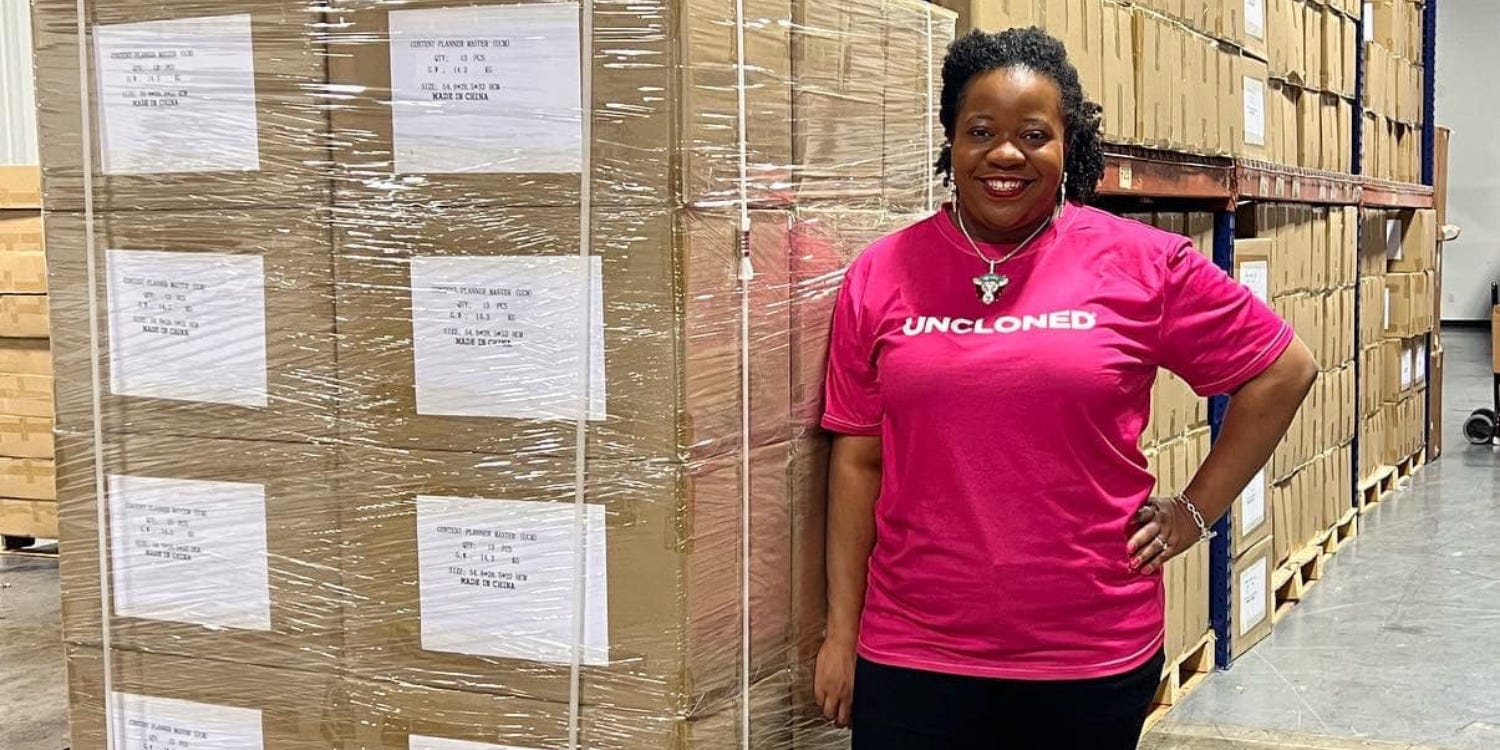
As we officially close out our physical product line, I need to share what I learned the hard way.
If you're thinking about diving into physical products, especially planners, and you're considering bulk orders because "the per-unit cost is cheaper," read this first.
These lessons cost me years and money I'll never get back.
But they might save you from making the same mistakes.
Lesson 1: I Only Calculated the Cost to Buy, Not the Cost to Hold
When we planned our planner launch, I was laser-focused on one thing: making sure the inventory was paid for.
We structured pre-orders to cover the entire shipment. By the time those planners hit American soil in late February 2022, we'd made our money back.
Mission accomplished, right?
Wrong.
What I didn't account for was what happens when that inventory sits. And sits. And sits some more.
I genuinely believed we'd sell through everything within two years.
We launched in December 2021. Started shipping in March 2022.
Here we are in 2026, and I'm finally letting it go.
That's four years of:
🟣 Storage costs
🟣 Physical space it's taking up
🟣 Mental energy managing it
🟣 Time I could've spent on higher-ROI activities
The upfront cost is only part of the story.
The real cost is what it takes to hold inventory long-term when it's not moving the way you projected.
Lesson 2: The "Great Deal" Per Unit Created an Illusion
We got an incredible deal on everything: the planners, the boxes, the tissue paper, all of it.
And that deal pushed me to order way more than we needed.
The math felt right. The cost per unit made it seem like we were winning, like we were saving money.
But I wasn't thinking about two critical things:
How long it would actually take to sell all that inventory
And what it would mean to warehouse and manage it long-term
Let's be real: a low cost per unit means absolutely nothing if it takes forever to move the product.
You're not saving money. You're just paying for it differently, in storage fees, in opportunity cost, in mental bandwidth.
The "deal" stopped being a deal the moment those planners started collecting dust.
Lesson 3: Even My Marketing Skills Couldn't Move Excess Inventory
I'm a marketer. I know how to build brands and sell products.
We tried everything to move these planners:
🟣 Sold them individually
🟣 Created bundles
🟣 Packaged them with a membership site
🟣 Integrated them into a mastermind program
🟣 Built an entire conference around one of the planners
🟣 Hosted countless online events and challenges featuring the products
🟣 Made them part of the UnCloned® Brand Vault, our 12-month implementation program that teaches people how to build an UnCloned® brand and become the obvious choice in their industry
With all that marketing firepower, we still had too much inventory left.
That was my reality check.
When your marketing can't move what you have, and you're already implementing multiple sales strategies, that's not a marketing problem.
That's an inventory problem.
Lesson 4: I Assumed Repurchase Behavior That Didn't Match Reality
I designed these products with repurchase logic baked in.
The UnCloned® Launch System? One planner per launch. My thinking: people launch, use the planner, see results, then buy another one for their next launch.
The UnCloned® Content System and Opportunity Hour® System? Designed for 30-day cycles. I figured people would cycle through them consistently.
The only one I didn't expect repeat purchases for was the UnCloned® Offer System, because it's foundational. You use it once to clarify what you're selling.
But here's what I didn't fully account for:
People weren't using them
And people weren't implementing or watching the courses that came with the planners
You can't repurchase something you're not actively doing.
My logic back then made sense to me. If someone's serious about launching, they'd probably launch twice a year. And based on how we launch, you'd make enough money that the planner cost would be irrelevant.
But I hadn't considered:
🟣 People's actual behavior versus their intentions
🟣 The lack of follow-through
🟣 The reality that they weren't watching the training
This isn't shade. It's just facts.
And those facts directly impacted repurchase rates.
Lesson 5: I Should've Let This Go 12 Months Ago (Sunk Cost Fallacy Is Real)
This is probably the biggest lesson.
I didn't let it go because of sunk cost fallacy.
When you've invested time, energy, money, and effort into something, you don't want to release it. You keep hoping it'll turn around.
But when you see sales trending down month after month, and every marketing attempt doesn't significantly move inventory, that's a strong sign it's over.
I'm determined. I'm motivated. I really wanted this to work.
So I ignored the signs I should've listened to.
And it cost me.
Not just in money, but in time and energy I could've directed toward things with better ROI.
---
If You're Thinking About Selling Physical Products...
Especially planners or anything that requires bulk ordering, consider these lessons seriously.
Calculate the full cost, not just the upfront purchase price.
Don't let a "great deal" per unit trick you into ordering more than you need.
Understand that even strong marketing can't fix an inventory problem.
Be realistic about customer behavior, not just their intentions.
And know when to let go, even when it hurts.
I hope this saves someone from making the same mistakes I did.
The planner game ain't what it seems.
P.S. If you’re free this weekend and you live in GA, check out the UnCloned® Marketing Systems Weekend we’re hosting. You can get a FREE planner while supplies last. You can check it out here 👉🏽 https://unclonedlink.com/umswfeb2026

Written by
Audria Richmond®
Marketing and launch strategist, speaker and author of UnCloned® Marketing. She helps brands, executives and small businesses Become the Obvious Choice.