Let’s talk about pricing.
I’ve been reading content around pricing, and a lot of people struggle with it. But pricing is easy if we accept the value we bring.
Let me explain.
If you see a Bentley riding the streets, without fail, you understand that it’s expensive. You may not know the price. You may not know where to buy one. You may not even be interested in owning one. But in your mind, without even owning it, you understand that there’s value associated with that asset.
Now, if you go to Walmart, you have very low expectations. You expect the lines to be long. You expect stuff to be thrown everywhere, all over the place. You don’t expect to go in and get out fast. You know that going in. But because you don’t have high expectations, you also expect everything to be cheap. And that’s by design. That’s part of their mission as a company.
So when it comes to pricing, we don’t spend enough time thinking about who our perfect client is and who we actually want to work with. And sometimes, you won’t even know that until you work with a few people and get the data.
But regardless of where you are in business, we all bring value to the marketplace that has to be accounted for.
When I think about pricing, it’s way more psychological than it is practical.
The practical side is this:
These are my expenses.
This is who I have to hire.
These are the taxes I’ll have to pay.
This is the insurance I need.
And based on that, here’s how I come up with my price. That’s the most logical way to approach it.
But when people start pricing, they make it personal.
They say things like:
“I don’t want to come off as being too expensive.”
“I don’t want to charge too much because I want people to see the value.”
“I want people to know I’m for them.”
“I want to be more accessible.”
“I want to help more people, and I can’t do that if I charge too much.”
“I don’t want to be perceived in the wrong way.”
“If I charge too much, they’re going to go work with my competition.”
But we should be pricing for practical, not emotional.
And by practical, I mean: What does it cost you, in real life, to service a client?
The reason I’m having this conversation is because I believe if you don’t price your business for profit, you’re going to end up pricing for bankruptcy.
And pricing for bankruptcy looks like undervaluing what you bring to the market.
It looks like charging low rates when you know you should be charging more.
It looks like not charging enough to cover your expenses, your taxes, your insurance, your team, and your payroll.
It looks like pricing from a place of poverty because you want to “help the people.”
I’ve purchased a lot of things in my life—both when I could afford them and when I couldn’t.
And in both cases, if I really wanted something, I found a way.
It’s funny how fast people say, “I don’t have the money. It’s out of my budget,” or whatever the excuse is.
But when the right opportunity shows up, people find a way.
There were some recent investments I made where I thought to myself, maybe I should budget for that, maybe I should wait. And then I reminded myself—opportunity doesn’t wait.
If you know for a fact that you should be a part of something…
If you know you can find a way to do it…
And you still refuse to do it because you don’t like the price…
That’s a different conversation. That’s a different thread entirely.
Because if you have a goal, and you see someone offering something that aligns with that goal, and you know they are the person who can help you get there…
If you like them, you like what they’re talking about, and you like how they show up…
Why do you keep denying yourself the opportunity?
And it’s the same thing on the flip side, when people are looking to work with you.
The reason I make quick investments, the reason I don’t overthink things, is because I want the people who are thinking about working with us to not overthink either.
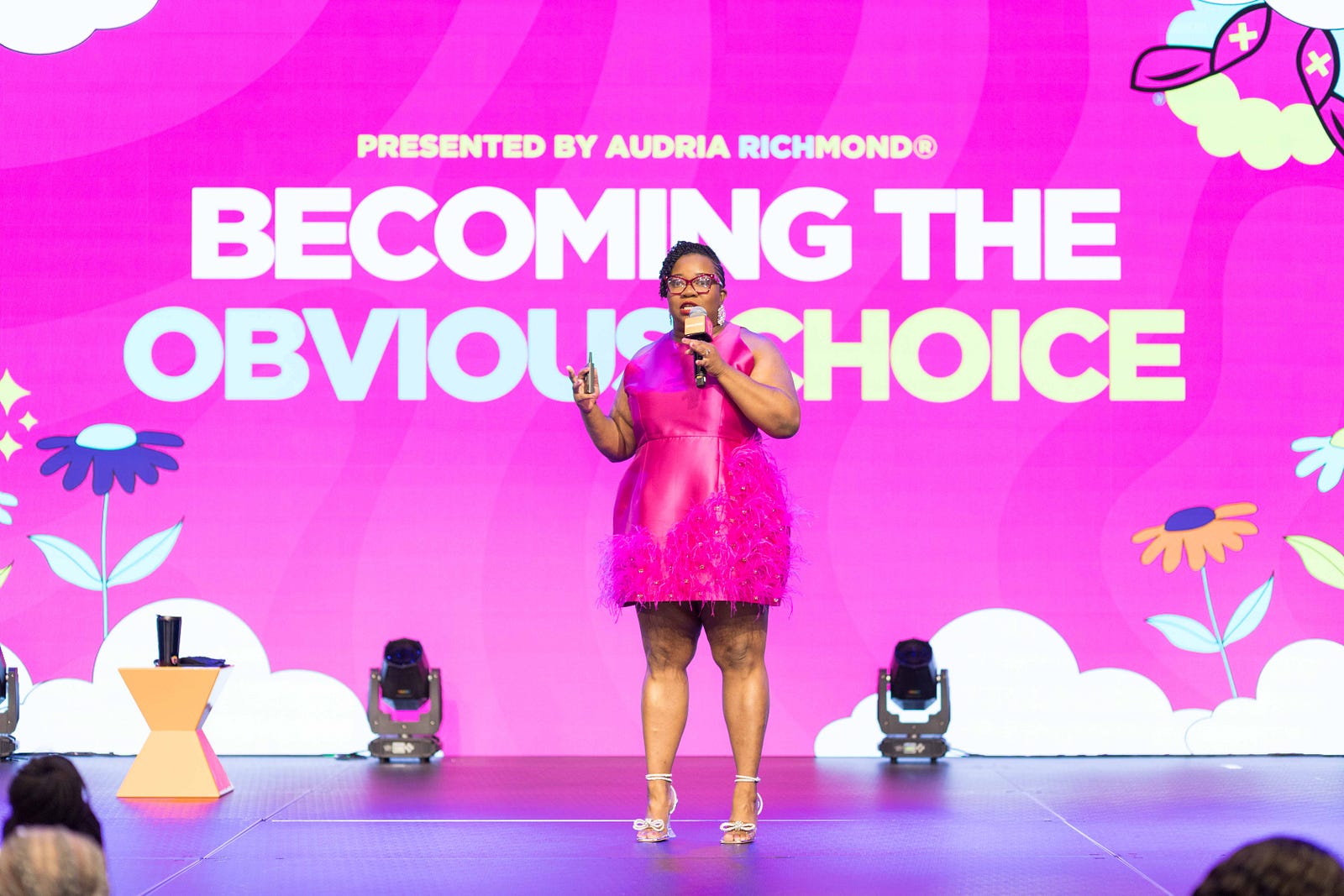
I want them to see us as the OBVIOUS CHOICE.
I want them to say yes to what we have to offer.
So when you’re thinking about your pricing, I want you to be more practical.
You have to price for profit.
We literally had to go back and say, yes, we’re going to increase the investment to join the UnCloned® Brand Vault. But there are also other areas in our organization where we need to increase the price. Because if we don’t, we’ll bankrupt our business.
I don’t know if you’ve ever heard of this before—this was new to me while I was reading—but there’s something called the CPI. The Consumer Price Index. It basically tells you how much inflation has happened over the years.
I’m not a guru on this, so I’m not going to go down a deep rabbit hole.
But the point is, if you don’t price accordingly, it’s just a matter of time before you’re not even profitable.
I was recently on a webinar for one of the programs I’m a part of, and they made an announcement that they need to increase their price. They’ve been charging the same rate for ten years. And now they’re feeling it.
So pricing isn’t just about helping other people.
It’s also about staying in business.
The next time you’re thinking about your pricing and you get pushback,
Let that be their problem, not yours.
P.S. I share content like this all the time inside the UnCloned® Community. You can request to join here --> https://www.uncloned.group/.

Written by
Audria Richmond®
Marketing and launch strategist, speaker and author of UnCloned® Marketing. She helps brands, executives and small businesses Become the Obvious Choice.